Showing posts with label learning. Show all posts

Wednesday, September 24

Sew Scurred

Last night I took a deep breath and went through the Vogue bin and picked out:


I am making the pants since it goes along with my fall "get cute" goal. I am using a khaki cotton/poly/spandex twill, and if these turn out well I'd like another pair in denim.


These slim fit pants feature a fly front, piping helltothenaw and *gasp*
real welt pockets.
ohmigosh.gonna.pass.out. OK ladies over there --->>>
please help me if I call on you!! hepmepleeeeeze

Plus, I have my pockets book, which I'm thinking shouldn't be read as a fairytale anymore... So I should be fine. I really am nervous, but as Carolyn reminded me it's just fabric. OK, breathe, Nikia.

My hand was feeling a bit better so I measured and cut out the pattern yikes last night. I'm going with my usual 14 but I will need to add 2 inches to the inseam.

I'd love to make the blouse, but I'll hold my horses for now.

Saturday, August 2

TuBeContinued

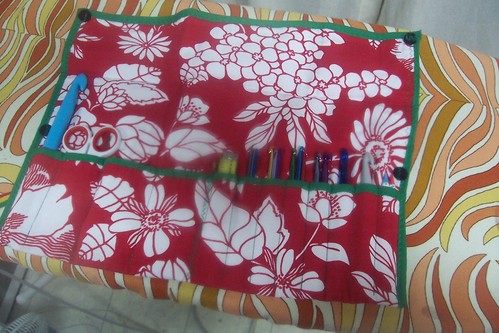
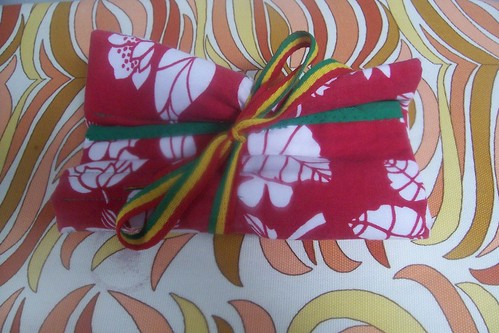
Here's my hook case, made from a place mat, bias tape and a shoestring.

my yarn stash

I can't stop crocheting!! I'm not to worried though, the newness will wear off in due time. I did get a handle on my yarn stash in these early stages. I have relegated myself to only what will fit in the chest. Which I plan on keeping full. To the brim.

The only thing that worries me about my new hobby is which direction I want to go in as far as "projects".

I spent a few days consumed with printing free online patterns and have collected a 3-inch binder full - organized by type - lol! I have also been to three libraries looking for crochet books to preview for purchase. So far I want none, which is good, because I already have 5, plus 3 crochet-related magazines. I also have joined Ravelry (I'm narcissaqtpie there too), but I am taking that site in very small doses because there is sooo much info and inspiration there.

My main problem is that, though I can read a written pattern with no problems, my stitch count and gauge are always way off.

I know I am supposed to make a swatch (which = muslin in sewing terms) but I totally am not with that idea. With crochet/knit swatching you create a portion of the pattern's stitches with the recommended yarn in order to measure and figure out what size of hook/needle to use. This is to ensure you get a properly sized item. What happens if your stitches don't match the pattern's guage? you have to unravel the whole thing and try a different sized hook/needle. No sir-ree, not for me. I need results/gratification. At least with sewing you get to try on or wear your muslin.

I think I crochet too loose and sometimes too tight but so far the projects I have completed have all turned out fine - which I attribute to my sewing math.

I am just extremely wary about trying to use anymore patterns. I really want to try hats, amigurumi, some of Debbie Stoller's projects, and PURSES!!! but I have a feeling, that I won't be so successful.

My latest project, "That Girl" from GYCO II turned out decent, but after I made the ribbed waistline with almost double the rows recommended because I was stitching too tight - I pretty much did my own thing. Which I had no clue what I was doing, but I liked it >:)
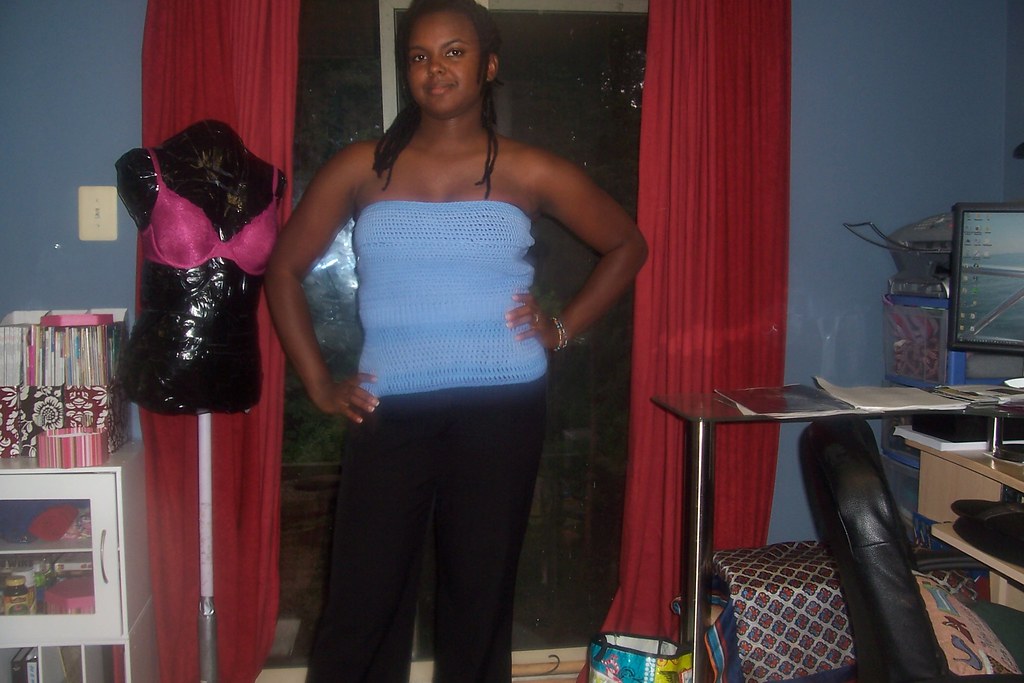
Another lesson from this project was to buy yarn according to dye lot. I bought 3 rolls/balls of Sugar n Cream in cornflower blue, one of them I discovered was a different hue! I recovered by adding "stripes" of the off color.

If I scrap pattern usage, then I can just freeform while learning the different decorative stitches and see what I come up with --- BUT there are so many cool patterns! I'll just have to take it day by day.

On the sewing front... I need to get on it!!! The garden party is three weeks away. I am "in progress" but not motivated. I'll probably do the last minute sprint sew and cross the finish line by a nose hair.

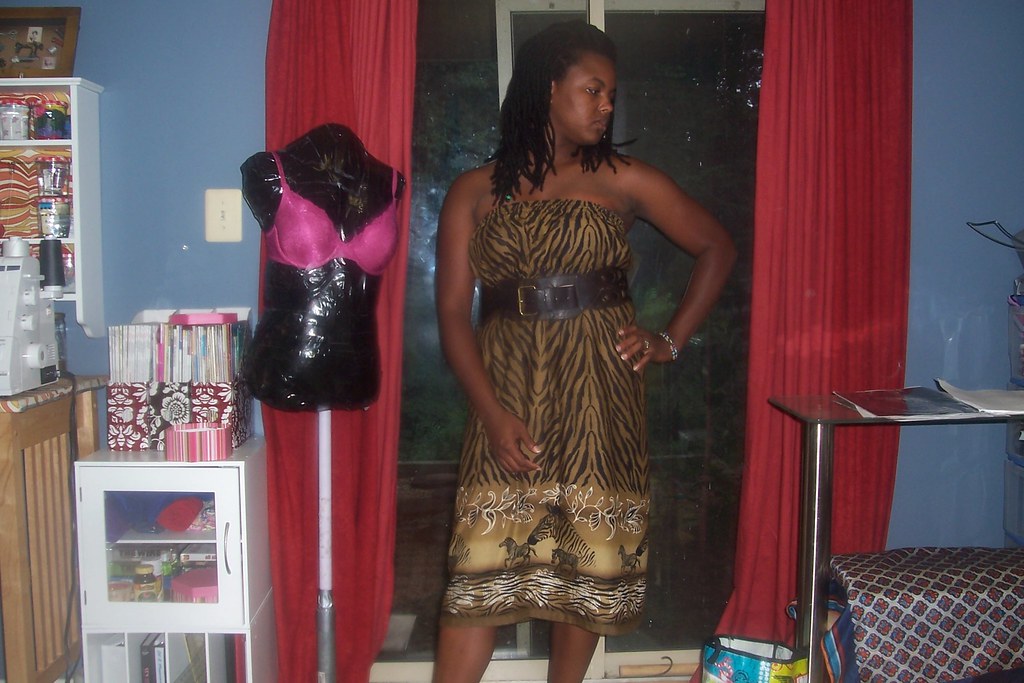
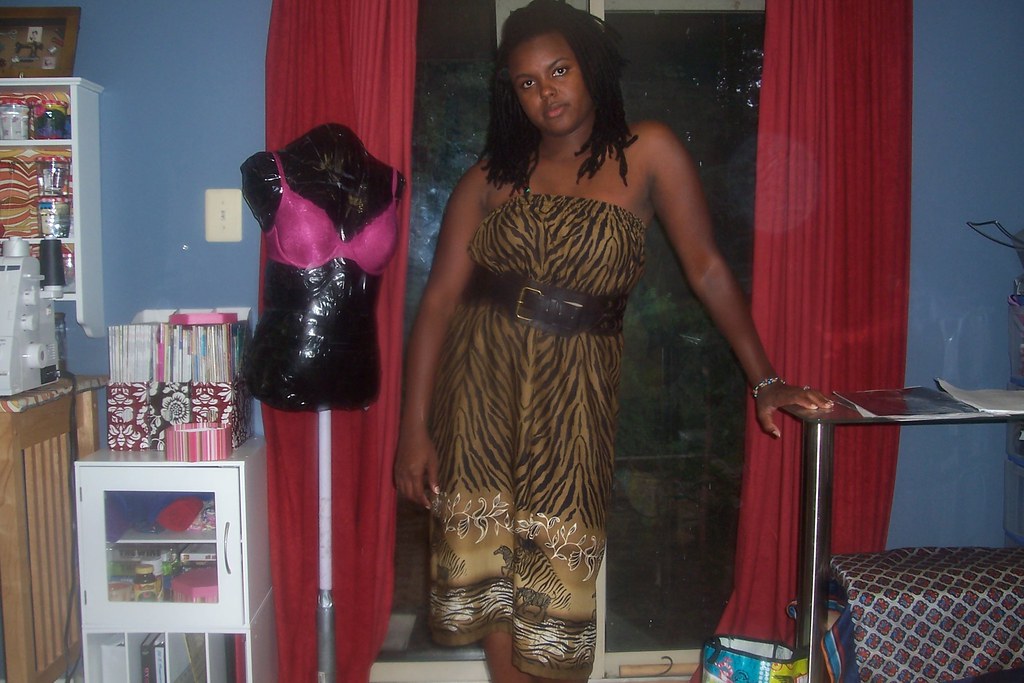
I did hustle up a quickie stash busting dress though. No pattern, just zig-zagged some rows of elastic at the top and underbust of this border print.
Saturday, April 19

Sewl Food: Fabric Buying

When I first started buying fabric, I was so excited about finding deals that I bought everything I could get my hands on because it was cheap. (I am sew in love with the Walmart $1 table)

BAD IDEA.

That impulse buying resulted in a tacky, low quality, cluttered stash. I felt like I wanted to chuck it all and start over but I can't do that with a clear conscience. I will just try to reduce faster than I add for now.

I know deep in my heart, that no matter how much I try:
  • I will always have a stash
  • I will always gravitate towards sale & clearance fabrics first
  • I will not always be able to resist buying a piece (or 2 or 3) of fabric when the urge hits me.
Knowing this I felt I needed to develop a new method for buying fabric. I decided to build a "happy" stash. This has slowed my purchases & makes me think before I buy and I am very happy with the fabric I bought this year.

My criteria for adding to a happy stash is:
  1. Know what the general yardage is for your garments. This will be based on your pattern stash. I don't always buy pattern and fabric together, so this allows me to buy what "moves" me and makes the piece more flexible. For me pants generally take 2.5 yds, knit tops 1.5 to 2 yds, woven tops about 2 yds, skirts 1.5 to 3 slim to full.
  2. Check the quality - when I scan a fabric I think Walmart or Bergdorf? Cheesy or trendy? Trashy or classy? This doesn't always equate to $$. I just bought some great stuff in the clearance section of Joann's (see pics below) and I will still shop the Walmart $1 table.
  3. Make time for fabric shopping & don't shop in a rush. I make the best choices when I have time to look and analyze. I try to go early or late to miss the crowds. By nature I am a "hunter" shopper, I look under and in-between to find those hidden gems.
  4. Ask yourself "Will I like this next year in case I don't sew it soon?"
  5. Gravitate towards naturals. I am finding that cotton and linen are so easy and such a pleasure to sew though! I say gravitate, because polyester often comes in some of the nicest prints. Most of my locally available cottons, rayons, linens are in florals and plaids - & not the cute ones. I am looking forward though to getting my hands on some silks and wools to practice with.
  6. Stock up on "classics" like shirting, solid knits, solid bottom weights and denim. Garments from these fabrics are always staples. I make these my just in case I want to sew something fabric purchases.
  7. Last but not least, just because it's free (or next to free), doesn't make it right. Last year when I went through my aunt's stash I was grabbing everything I could. If I get the chance again, I will be more selective.
Here's what I got today for about $19.

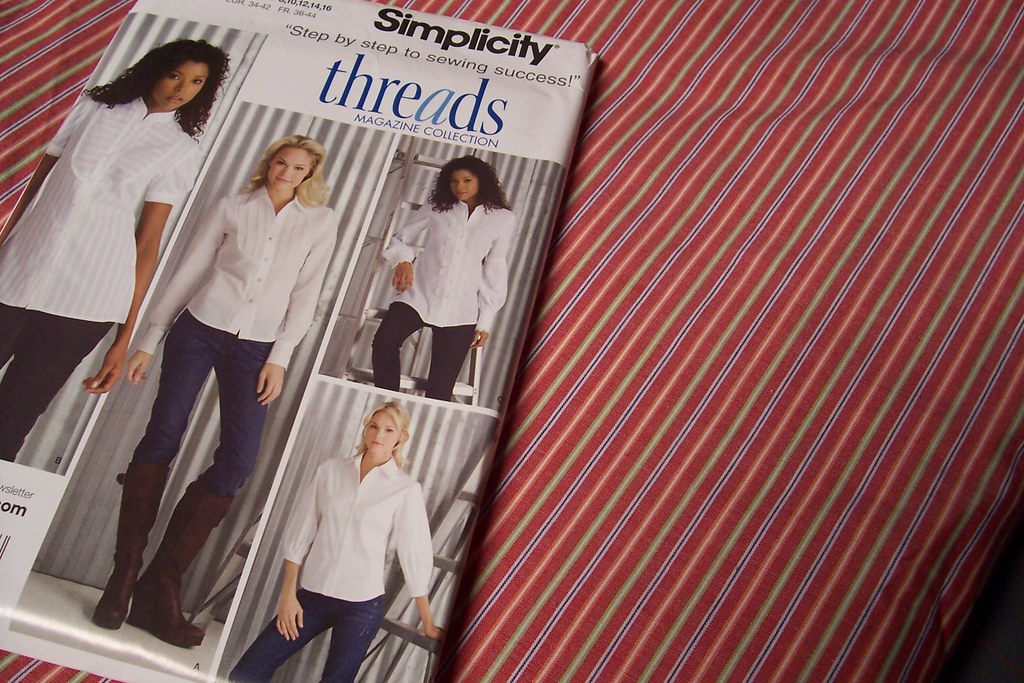
100% cotton stripe shirting. $2.50/yd. Seeing it, I immediately thought about Simplicity 3684.
I JUST noticed those HIDEOUS BOOTS she's wearing - LMAO!!!!

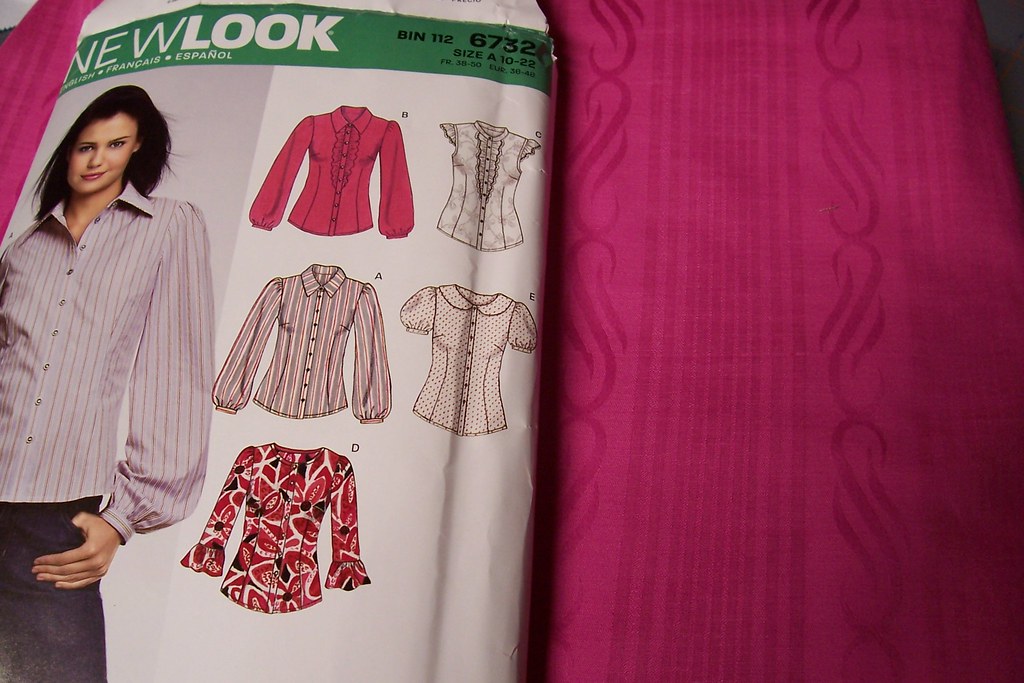
100% cotton Italian Jacquard $2/yd for New Look 6732

camo cotton/spandex blend, has some sequin detail. $1.5/yd for Simplicity 3515. (bottoms)
and for the top, 100% cotton Alexander Henry Mocca print $2.5/yd

Tuesday, December 18

Sewl Food: Sergers

long winded posting alert....

I was planning on posting pics today of the McCall's jacket but Adrienne got me thinking about those darn resolutions!

Before I make mine every year, (usually on my b-day, which is coming SOON!) I take a moment to reflect on my year.

Last year I did not make any solid resolutions, I just wanted to try and enjoy life and enjoy my family. We had just lost our cousin-nephew-son Ahmad (RIP) in a car accident and I was hurting. I sewed and cried all winter (I'm for real). By spring of this year, my interest in sewing grew immensely and really helped me get back on track and helped me get focused on fun and reaching out to others and I even started a blog, lol!

What a sewlful year it has been! I have learned so much. I am so excited about the people I was able to meet online and in person. I mostly stuck to my "sewing goals." The biggest turning point though was getting a serger. Seriously.

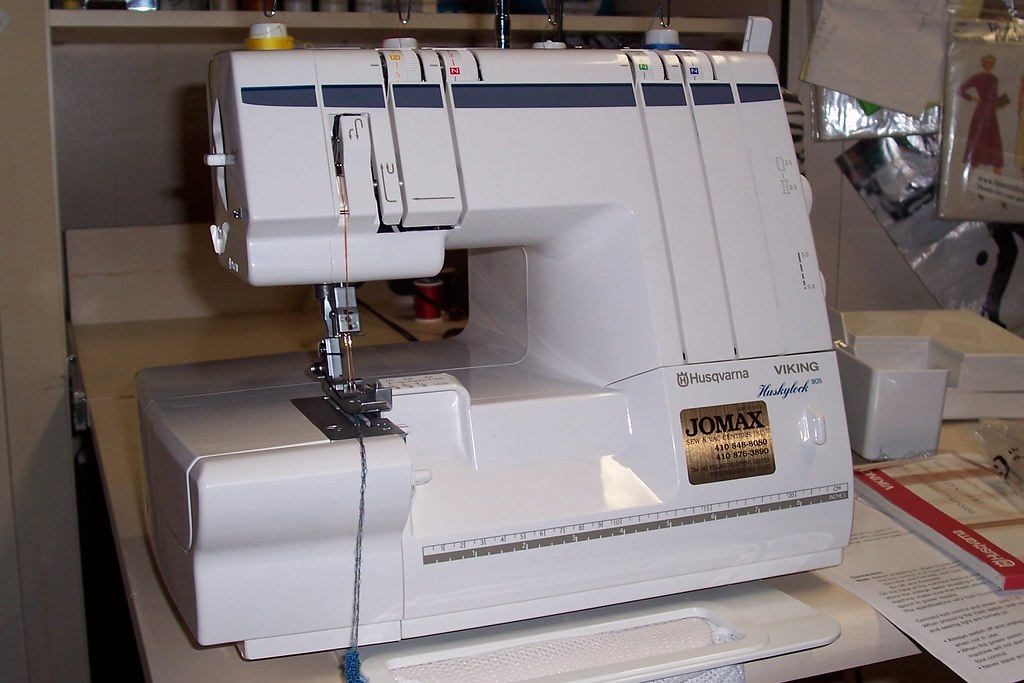
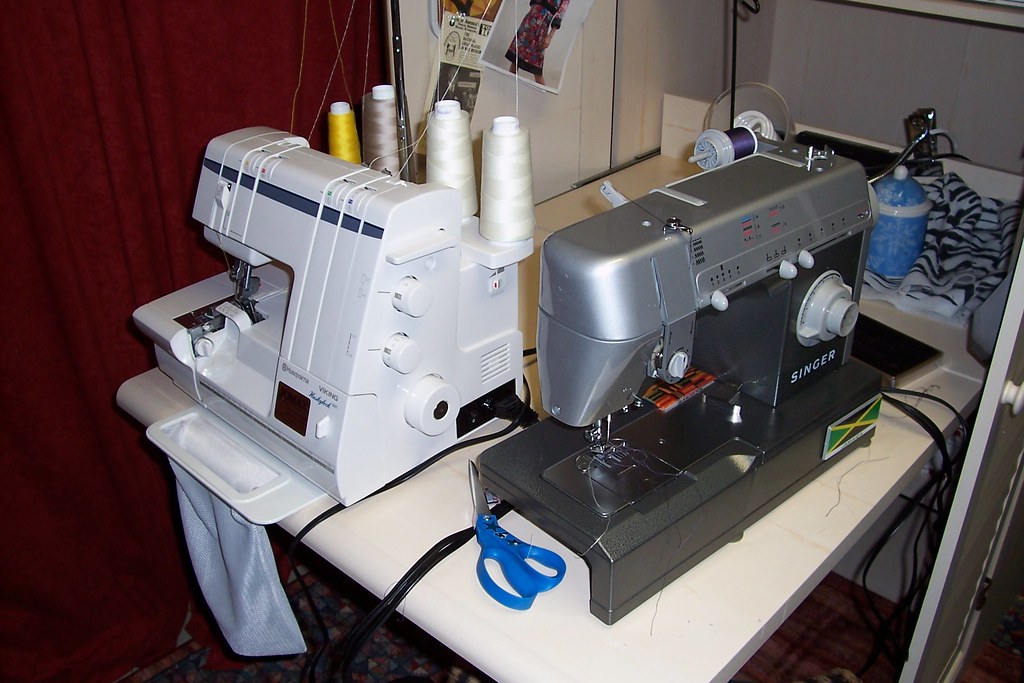
(fond memories: fresh out of the box)

Throughout the year while doing my sewing "studies" I pined away for a serger, but I had never used one or knew what they were really used for & never thought I could afford one. I only knew that the "pros" used them and I just HAD to have one since I wanted to be a "pro".

I scoured the Internet and library until I knew enough to select one based on my preferences and decided on the Viking Huskylock 905.
  • Don't listen to the "snobs", do your own research. (what i mean by "snobs" are those who have a "preference" for only top of the line and look down on other brands)
Good Books:
The New Sewing with a Serger (Singer) great book! my personal choice
The Complete Serger Handbook pretty good, if you aren't feeling the singer book check this one out
Serger Secrets: High-Fashion Techniques for Creating Great-Looking Clothes found it at the library - dated fashionwise - but inspiring!
Serge With Confidence great book and companion to the Singer book.

Good Links:
http://www.sewingwithnancytv.com/ go to "techniques" and watch ALL of the serger videos
More serger videos
Selecting a serger
Shopping for a Serger (from Threads)
Also read those reviews on PatternReview.

  • Go to a dealer and take a test drive!

After the painstaking purchasing process of finding a comfortable machine, a good dealer/store and making layaway payments I am a proud & satisfied owner of a serger since August 07. Since that short time, I feel like my sewing enthusiasm has increased even more. I've heard seen people say type on PR, "I don't know why I didn't get one sooner!" and I am echoing loudly because the serger is the best sewing-related investment I've ever made. It motivated me to do more than just stitch stuff together.

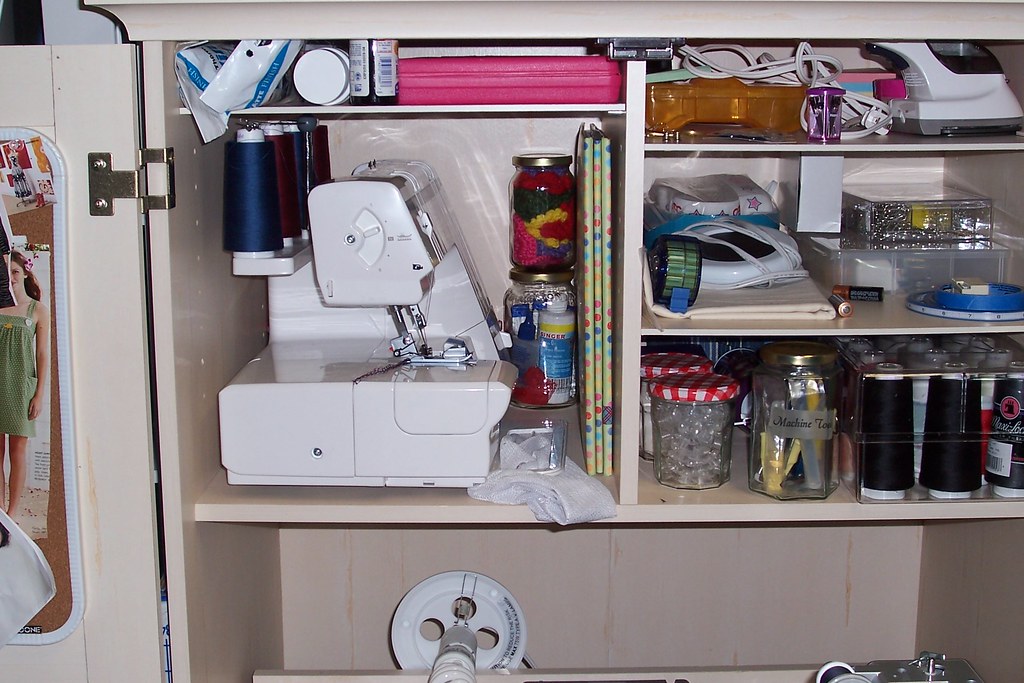
(stored w/o dustcover)

I previously thought a serger was totally out of my league as a beginner. Boy Girl, was I wrong. I love sewing and I know if I want to maximize my skill level & creativity I have to think like and act like what *I* envision as a pro.

  • When you hear folks say sergers aren't for beginners, DON'T LISTEN!!!

I invite new and learning sewing enthusiasts to continue to expand their horizons. Making stuff is fun but, Don't be afraid to try absolutely everything sewing-within your means of course, even if you think you aren't ready. It can only enhance your experience.

Tuesday, December 11

Sewl Food: Bias

That darn McCalls 5466 dress did not work out in the end, but I didn't let it break me. I turned it into a learning experience. I spent the week/weekend learning why it didn't work and it turned out it was the fabric! The type of fabric I used was unknown to me (from Aunt's stash) but it closely resembles the "linen tweed" I saw recently in A Fabric Place. The problem that I didn't know from the beginning was that the loose weave was the reason I had a hard time from the get go with lining up the grain when I was cutting and the over-stretching with the zipper application.

I never thought about bias cutting before since I'd never done it. I just figured it was another way to line up a print. WRONG! I got in my books and on Google and found some useful info. Here is what I learned about bias:

"Fabric cut on the bias has much more elasticity than when it is cut on the straight grain. An angle of 45 degrees to the straight grain of the fabric is known as the true bias.

As the bias grain of a fabric stretches far more than the true or crosswise grain, great care must be taken when cutting out and seaming the sections.

If the fabric is distorted out of shape at either stage, the garment will not hang correctly. Garments cut on the bias will have a tendency to drop, or stretch. It is a good idea to allow a bias cut garment to hang on a suitable coat hanger for at least 24 hours before hemming it."
from Take Up Dressmaking by Sue Whiting

Here is more info from an awesome and thorough Threads article.

Widen seam allowances
Although bias cuts don't ravel, the fibers on cut edges relax and open up, so even 5/8 in. away from a cut edge isn't an accurate stitching line. To your adjusted pattern pieces, add 1-1/2-in.-wide seam allowances, in addition to the extra ease, on center, side, and shoulder seams. Use 5/8-in. seam allowances at the neck. Always mark stitching lines with thread, tracing paper, or chalk as soon as the fabric is cut, before removing the pattern pieces.

Remove excess stretch
To prevent bias-cut garments from continuing to stretch as they're worn, it helps to press each pattern section to remove some of the stretch before construction. Pressing simulates the effect of gravity and results in a more stable garment. This step is a lifesaver when working with silky, gauzy, or loosely woven fabrics.

After cutting the fabric and removing the pattern, press each piece firmly, gently, and evenly from top to bottom. Now repin the pattern onto the fabric, adjusting seamlines if the piece has grown smaller.

Sewing bias seams
The key to smooth vertical bias seams that won't pop when the garment is worn is to stretch them as you sew, using a 2.5- to 3-mm stitch. The seam will look rippled after stitching but will press out beautifully. You don't need to stretch as you sew shoulder seams because they're not cut on the true bias, and so don't stretch as much.

To assemble the garment, sew center seams first, then fit at the side seams by pinning along the stitching line, wrong sides together, and adjust to get the look you want. After the garment is fitted and sewn, trim seam allowances to 3/4 in. Since bias doesn't ravel, seam finishes are optional. I prefer a pinked edge; the serger can cause rippling and seam show-through.


So equipped with that info, I got busy on another version of the dress with a better fabric! Here is a preview.

look at that butter smooth zipper!!!
"...
not no Parkay, not no margarine, strickly butta baby, strickly butta"